Published
- 5 min read
What is Placer Gold? (And How to Find It)
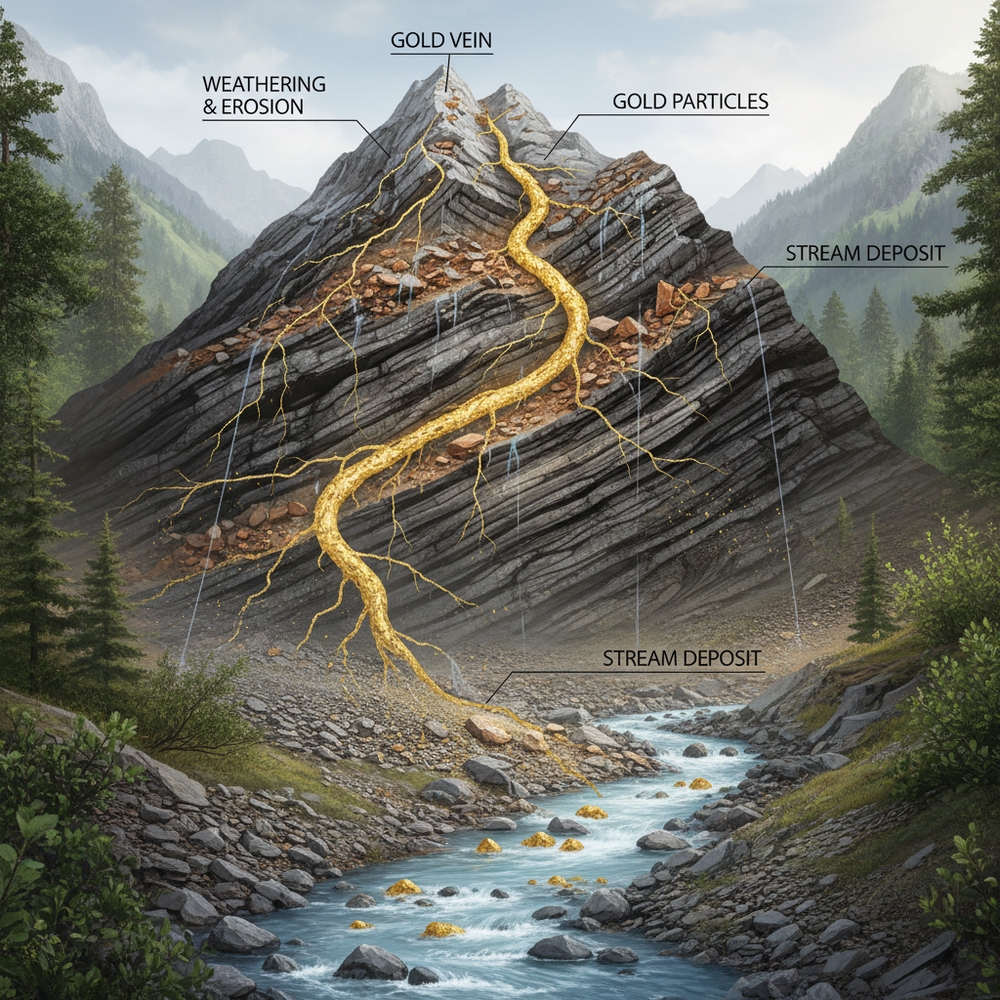
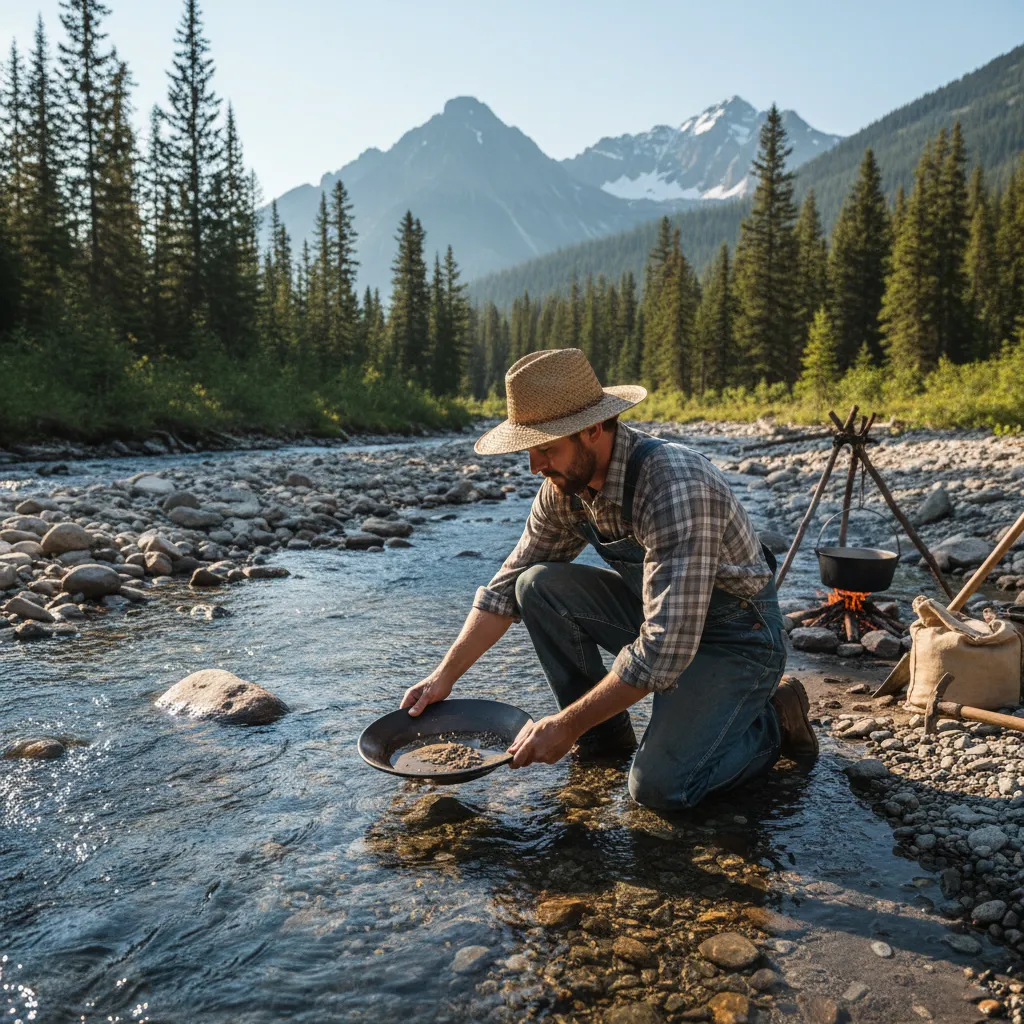
Placer gold is loose gold that’s been freed from rock and deposited in streams, rivers, and ancient waterways. It’s the stuff you can actually find with a pan—no dynamite or heavy equipment required.
The word comes from Spanish (“placer” meaning sandbank), but you don’t need to know the etymology to find it. You just need to know where it ends up.
How Gold Gets Loose in the First Place
Gold starts locked inside quartz veins deep in mountains. Over millions of years, weather does the work for us. Freeze-thaw cycles crack the rock. Rain dissolves the softer minerals. Roots pry apart boulders.
Eventually, chunks of gold-bearing quartz break free and tumble into creeks. Water grinds away the quartz, and the gold—being incredibly dense—sinks to the bottom of whatever waterway it lands in.
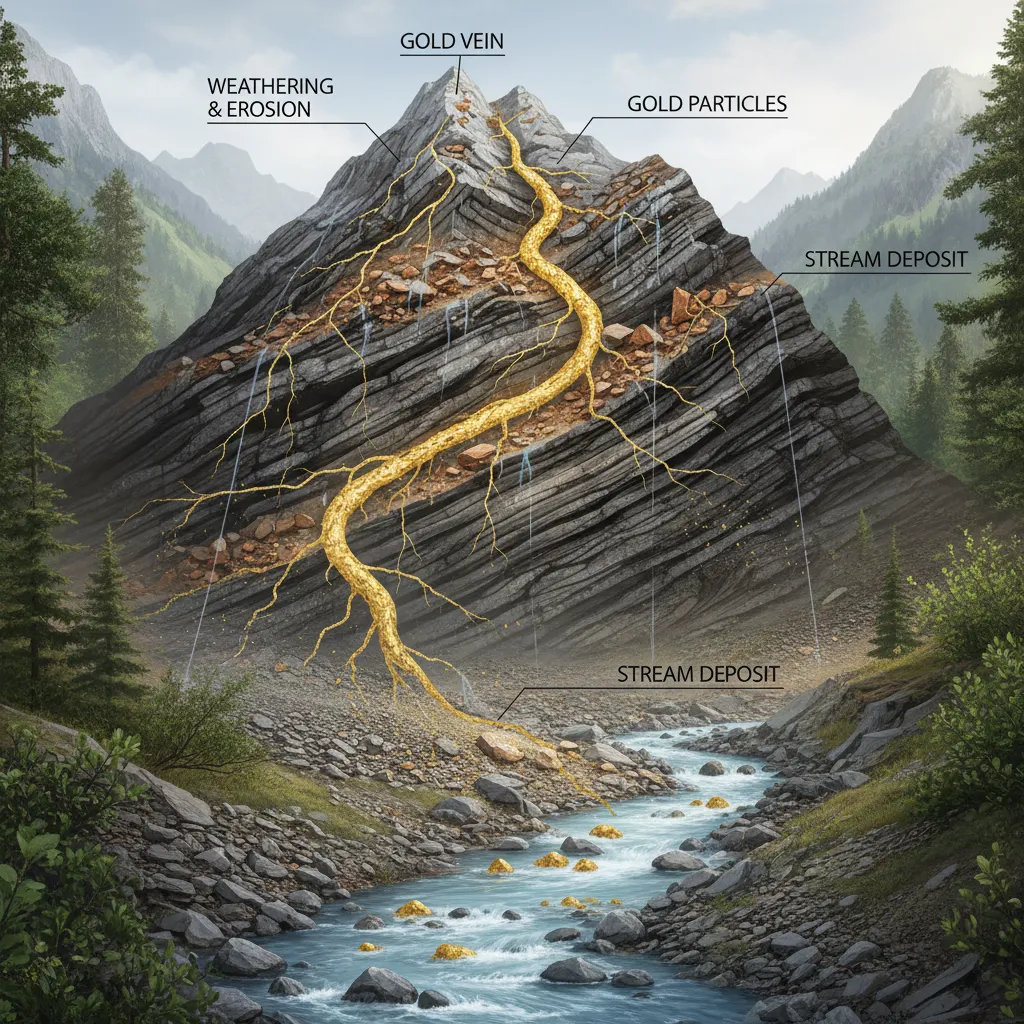
Here’s the cool part: gold is 19 times denser than water. So while sand and gravel wash downstream during floods, gold drops out of the current fast. It works its way down through gravel until it hits bedrock and gets stuck.
That’s your placer deposit. Nature pre-concentrated it for you.
Where Placer Gold Collects
I spent months compiling USGS data and historic mining records into a map specifically to answer this question. Here’s what the data shows about where gold accumulates:
Inside bends of streams. Water moves fast on the outside of a curve and slow on the inside. Gold drops out where the current slows. Every single time.
Behind big rocks. Any boulder creates a dead zone on its downstream side. Gold settles there. I’ve pulled good color from behind random boulders that looked completely unremarkable.
Bedrock cracks. Once gold reaches bedrock, it’s trapped. Crevices running across the current are basically nature’s riffle system. Clean them out.
Old river channels. This one blew my mind when I first learned about it. Rivers move over time. Those 1849 miners were pulling nuggets from ancient channels that ran 200 feet above the current stream level.
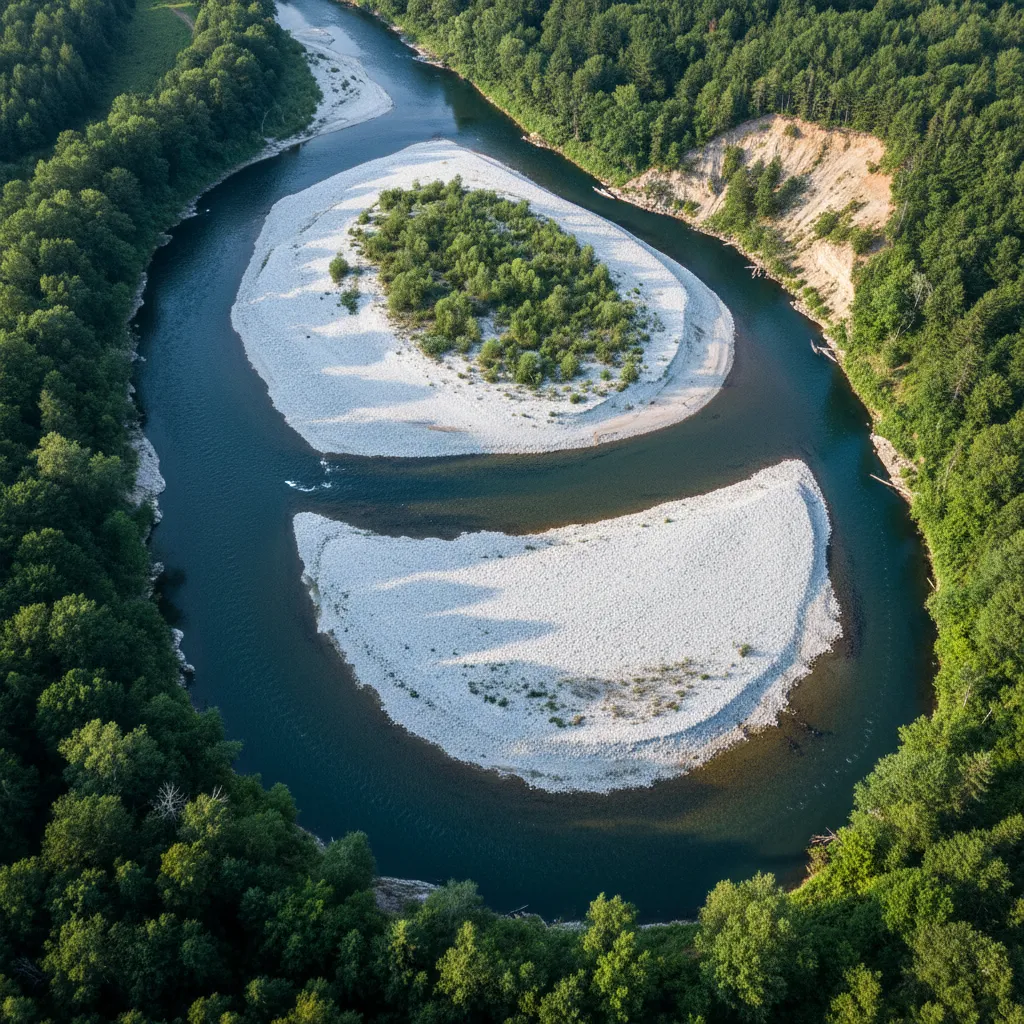
I built a map that shows where placer deposits have been found historically across the US. The patterns are wild—you can literally see the old river systems that don’t exist anymore.
How to Tell Real Gold from Fool’s Gold
I can’t tell you how many times I’ve watched someone get excited about pyrite. Don’t be that person.
Real gold:
- Stays the same warm yellow color in any light
- Can be flattened without shattering (try pressing it with a fingernail)
- Sinks immediately to the bottom of your pan
- Has smooth, rounded edges from tumbling in water
Pyrite (fool’s gold):
- Has a brassy, sometimes greenish tint
- Shatters when you hit it
- Forms angular crystal shapes
- Way lighter than it looks
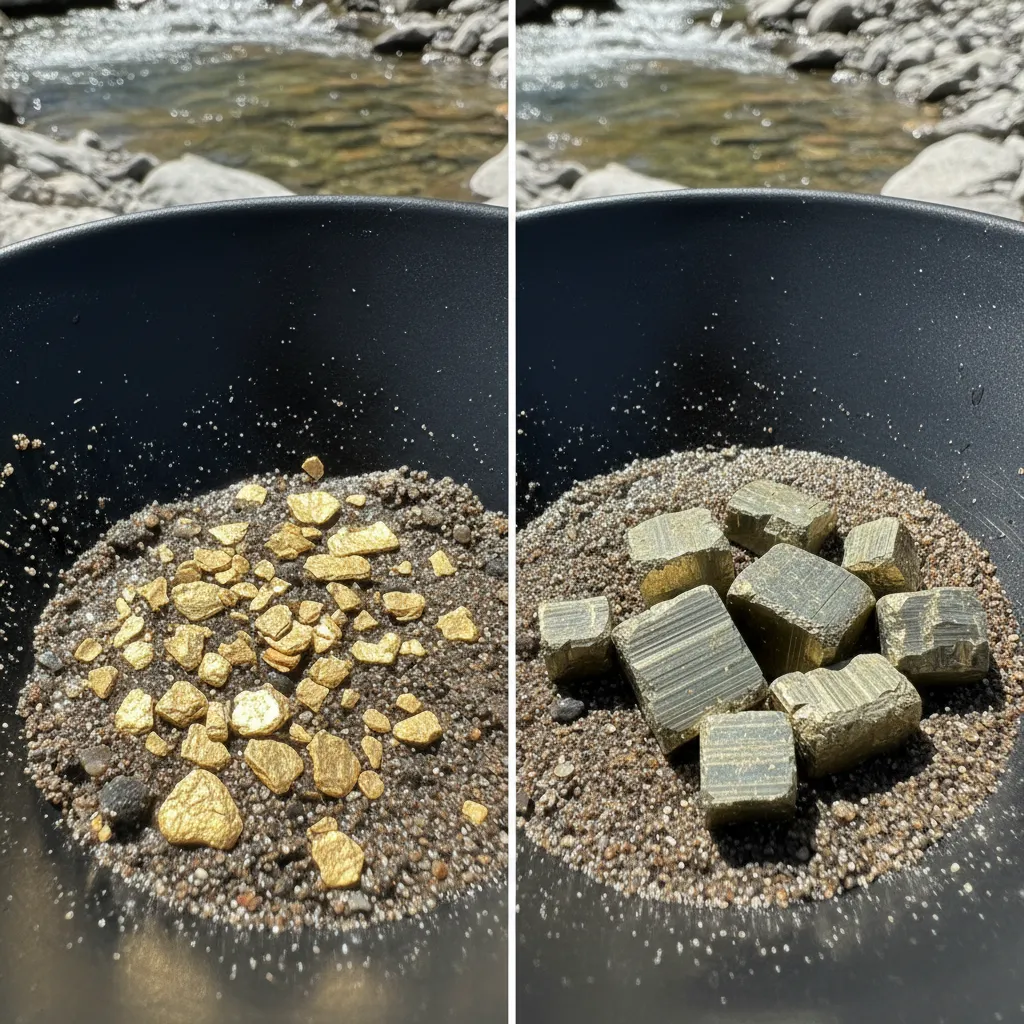
The weight test is foolproof. Gold is stupid heavy. When you swirl your pan, gold moves like it’s glued to the bottom while everything else washes over it. Pyrite and mica flutter around like they can’t decide where to go.
If you’re still not sure, try the fingernail test. Real gold will flatten or dent. Pyrite crumbles or stays rigid.
The Best States for Placer Gold
Look, you can technically find gold in way more places than most people think. But some areas are just stacked with documented deposits:
California — The Sierra Nevada foothills are still producing. The Yuba, American, and Feather Rivers were ground zero for the Gold Rush and they’re not empty yet.
Alaska — If you want to find gold on beaches (yes, really), Nome is your spot. The interior has creeks that have barely been touched.
Colorado — Clear Creek near Denver is accessible and productive. The San Juan Mountains down south have serious placer deposits.
Arizona — Lynx Creek near Prescott is probably the most famous spot. The desert placers produce fine gold.
Oregon and Idaho — The Rogue River system and Boise Basin get less attention, which honestly just means less competition.
Check your area on the map—I was surprised how many documented gold sites exist within a few hours of major cities.
Tips I Wish Someone Told Me Earlier
Sample before you commit. Take a quick pan from five different spots before spending three hours in one location. Mark which ones had color, then go back to the best one.
The surface lies. Gold works its way down through gravel. The good stuff is at bedrock level. If you’re only panning surface material, you’re leaving gold behind.
Timing matters. Late summer and early fall mean lower water levels. More exposed gravel bars, easier access to bedrock, less current fighting your pan.
Floods are your friend (after they pass). High water moves gold around. Check the high-water line after spring runoff—gold deposits along those marks as the water drops.
Go perpendicular. Cracks in bedrock that run across the current trap way more gold than cracks running with the flow. Physics.
One More Thing
I’m not going to pretend you’ll get rich prospecting. That ship sailed in 1852. But finding real gold—even a few flakes—hits different than almost any other outdoor activity I’ve tried.
There’s something about holding actual gold you pulled out of a creek that just doesn’t get old. And now that I’ve mapped where thousands of historic deposits are, the guesswork is basically gone.
Go find some gold. The map’s free. The creeks are waiting.