Published
- 12 min read
Abandoned Gold Mines Near Me (How to Find & Explore Them)
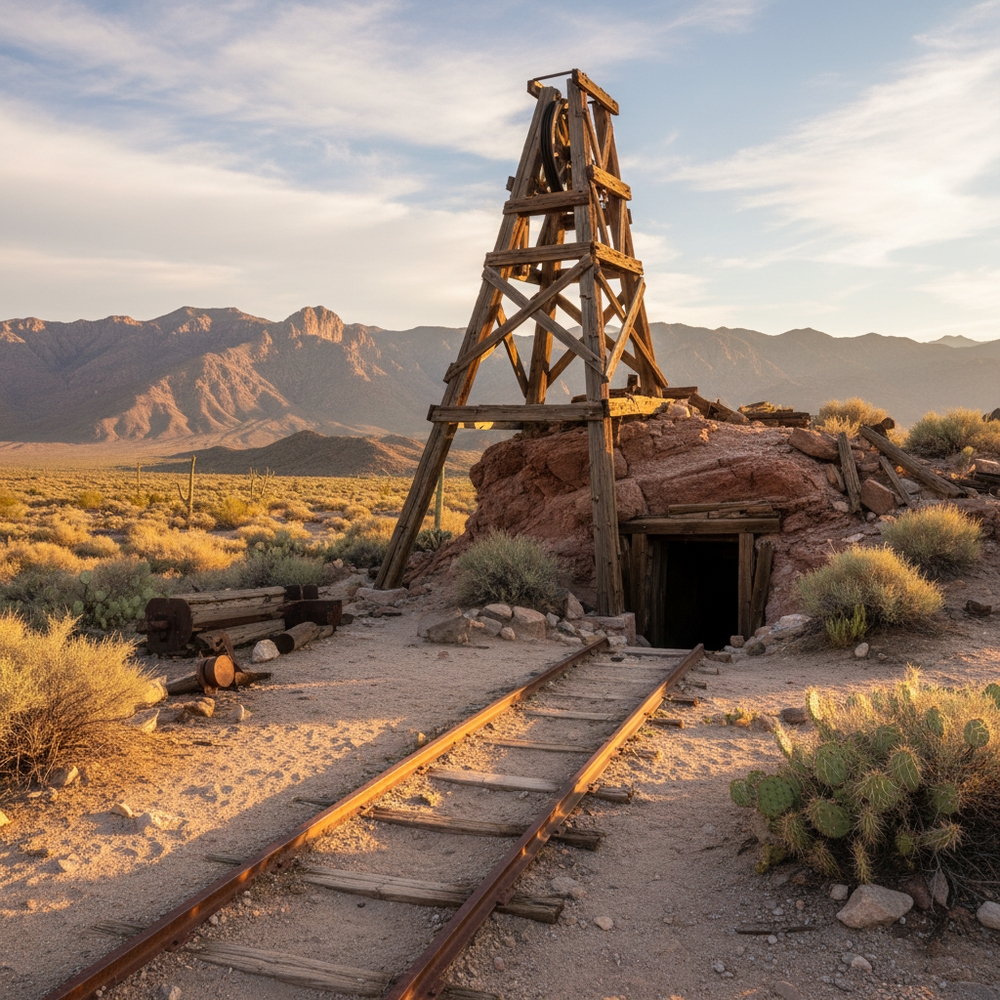
If you’re searching for abandoned gold mines near me — or near you, wherever you are — I built a tool for exactly this. Check out the GoldFever.app mine map, which plots thousands of abandoned gold mines across the US using data from the USGS Mineral Resources Data System (MRDS) and state geological surveys. Zoom into your area and see what’s nearby.
Now let me tell you what to actually expect when you find one, because it’s nothing like what you’re picturing.
The Bradshaw Mountains, January 2024
I want to start with a specific trip because I think it’ll set your expectations better than a list of bullet points.
My friend Jake and I drove south of Prescott on a BLM road that was more pothole than road. Jake’s truck — a 2008 Tacoma with 180k miles that he loves more than most humans — was taking a beating. He was cursing me, the road, and whoever decided this constituted a “maintained surface” for about forty minutes straight. We were looking for a mine I’d found on my map, marked in the USGS records as a small gold prospect from the early 1900s.
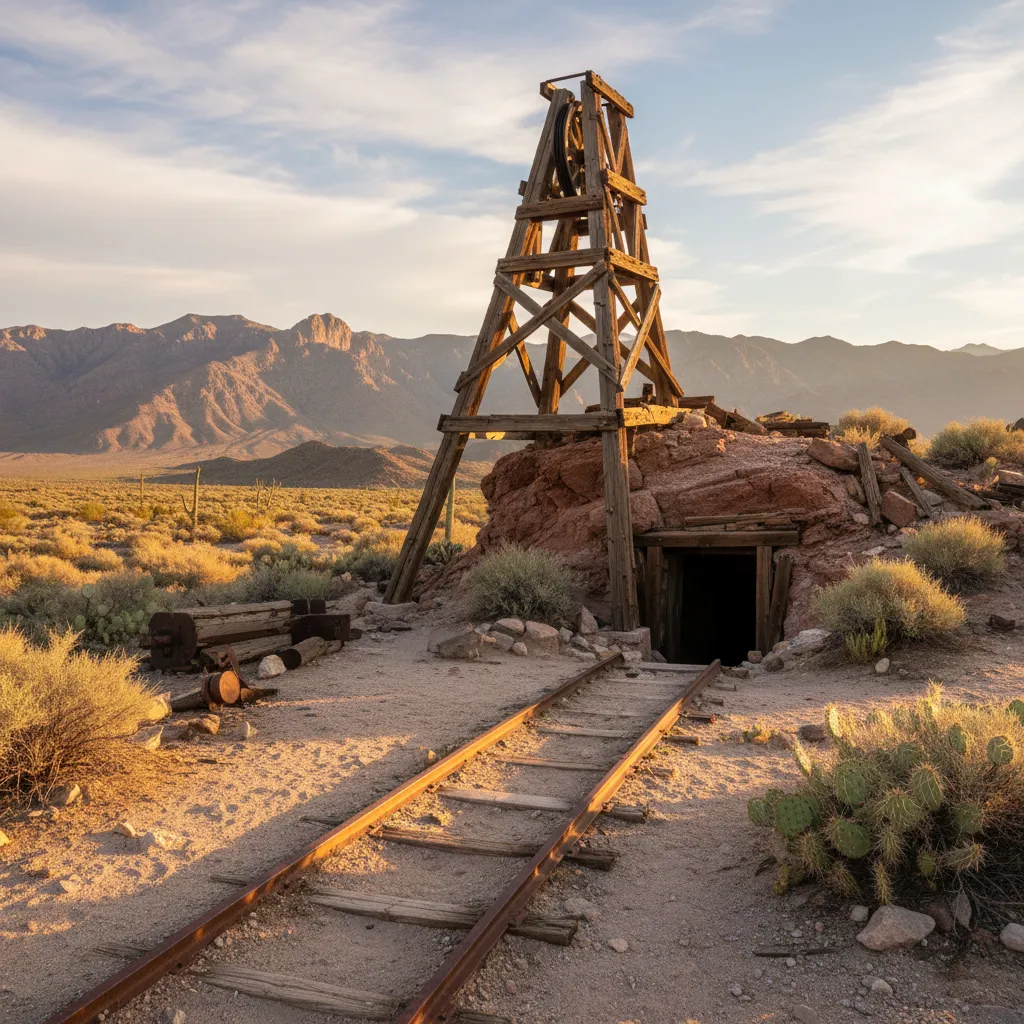
We almost walked right past it. The entrance was just a dark shadow on a hillside, maybe four feet tall, framed with rotting timber that had turned gray and spongy from a century of weather. There was a rusted rail track disappearing into the darkness, and the smell coming out was this mix of wet rock and something metallic — iron oxide, probably, but it smelled like the earth’s insides. Cool air flowing out even though it was sixty degrees outside.
Jake wanted to go in. I physically blocked him. We argued about it for ten minutes, which felt ridiculous standing on a mountainside, but I’d read enough accident reports to know better. He’s still annoyed with me about it, but he’s also still alive, so I’ll take the trade.
We spent the next two hours exploring the surface instead. Found a rusted ore cart wheel half-buried in the tailings. Some hand-forged square nails scattered around what was probably a storage structure. Chunks of quartz with traces of iron staining that could mean gold-bearing material was processed nearby. I picked up a piece of stamp mill liner — a heavy curved piece of iron with parallel grooves worn into it from decades of crushing ore. It’s sitting on my shelf next to a jar of pyrite from my first trip to the Yuba River, which I collected before I knew the difference between pyrite and gold. Real impressive collection.
What Most Old Mines Actually Look Like
The Bradshaw trip was a good one. Most aren’t that interesting.
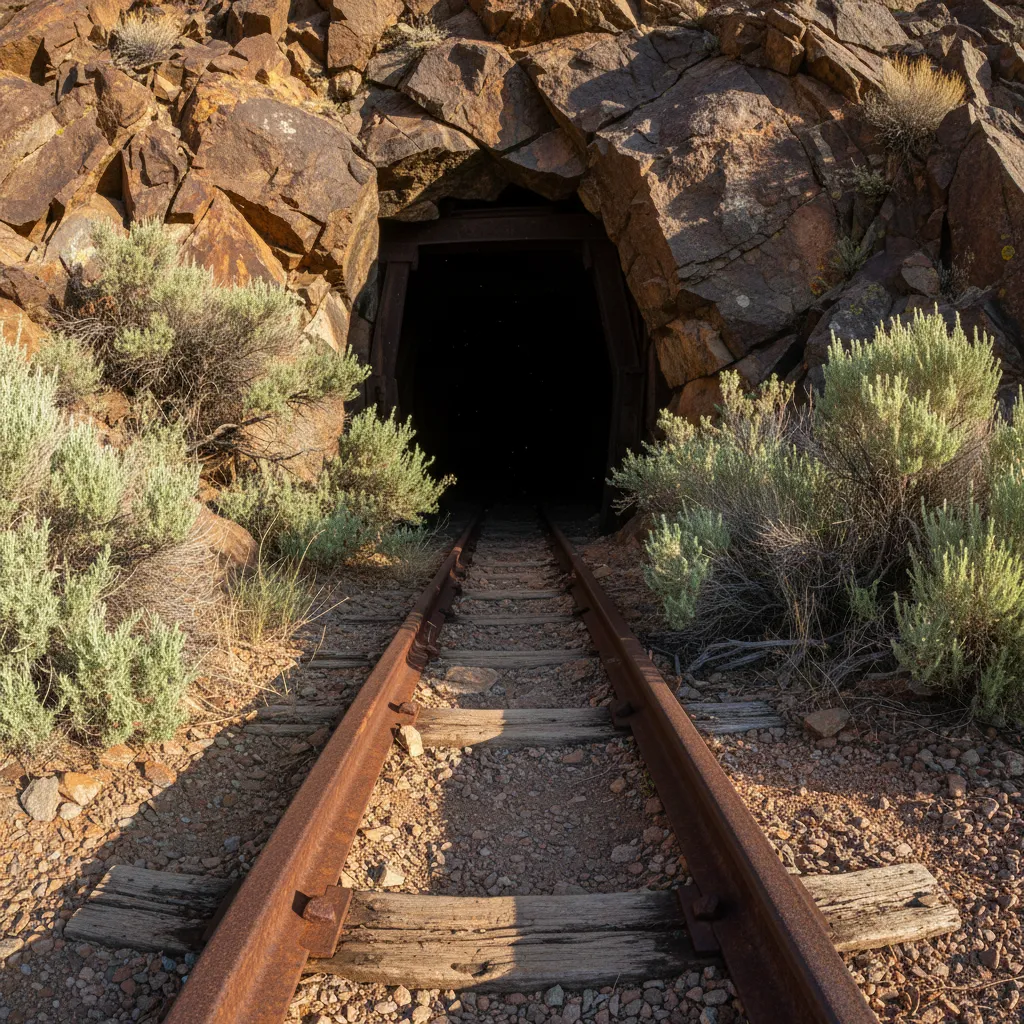
Usually you find a collapsed depression in the ground where a shaft or tunnel used to be. Maybe some scattered tailings — mounds of processed rock that are often the only visible sign from a distance. Rusted metal fragments that could be anything. A few rotting boards. It takes imagination to reconstruct what these places looked like when they were operating.
The best-preserved sites are in the desert where dry air slows the decay. Nevada and Arizona have ruins that look almost frozen in time. Colorado’s high-altitude mines deteriorate faster, though the scenery more than compensates. I tried to hike to a mine above Silverton at 11,500 feet once and was gasping after 200 yards — I live at 5,000 feet and apparently that doesn’t count for much when you add another mile of elevation. Bring water and go slow unless you’re already acclimatized.
Why Abandoned Gold Mines Still Have Gold
Here’s what most people don’t realize: old-timers only chased high-grade ore. When gold was $20 an ounce — the fixed price under the Gold Standard Act of 1900 — miners needed at least one ounce per ton just to break even. Anything below that got tossed on the dump pile.
With gold now over $3,300 an ounce (as of early 2026), those “worthless” tailings can contain economically interesting material. According to the USGS mineral commodity summaries, historic mine waste is increasingly recognized as a potential secondary resource. The tailings have been weathering for 120-150 years — rain, frost cycles, and chemical breakdown slowly free gold particles from their host rock. The dumps are literally richer now than when the miners discarded them.
The practical takeaway: you don’t need to go underground to find gold at these sites. A basic panning setup and some patience is enough to test tailings for color. Focus on the rusty-brown limonite (iron oxide) material, not just the white quartz everyone grabs. Limonite is soft, almost clay-like, and free-milling gold falls right out when you break it apart.
Understanding different gold recovery techniques — dry washing, sluicing, even basic gravity separation — makes the difference between finding color and going home empty-handed. The old miners used stamp mills and mercury amalgamation. You can do better with a $40 pan and some knowledge of where to dig.
Don’t Go Inside
I’m going to be more direct about this than the safety section you’re probably expecting.
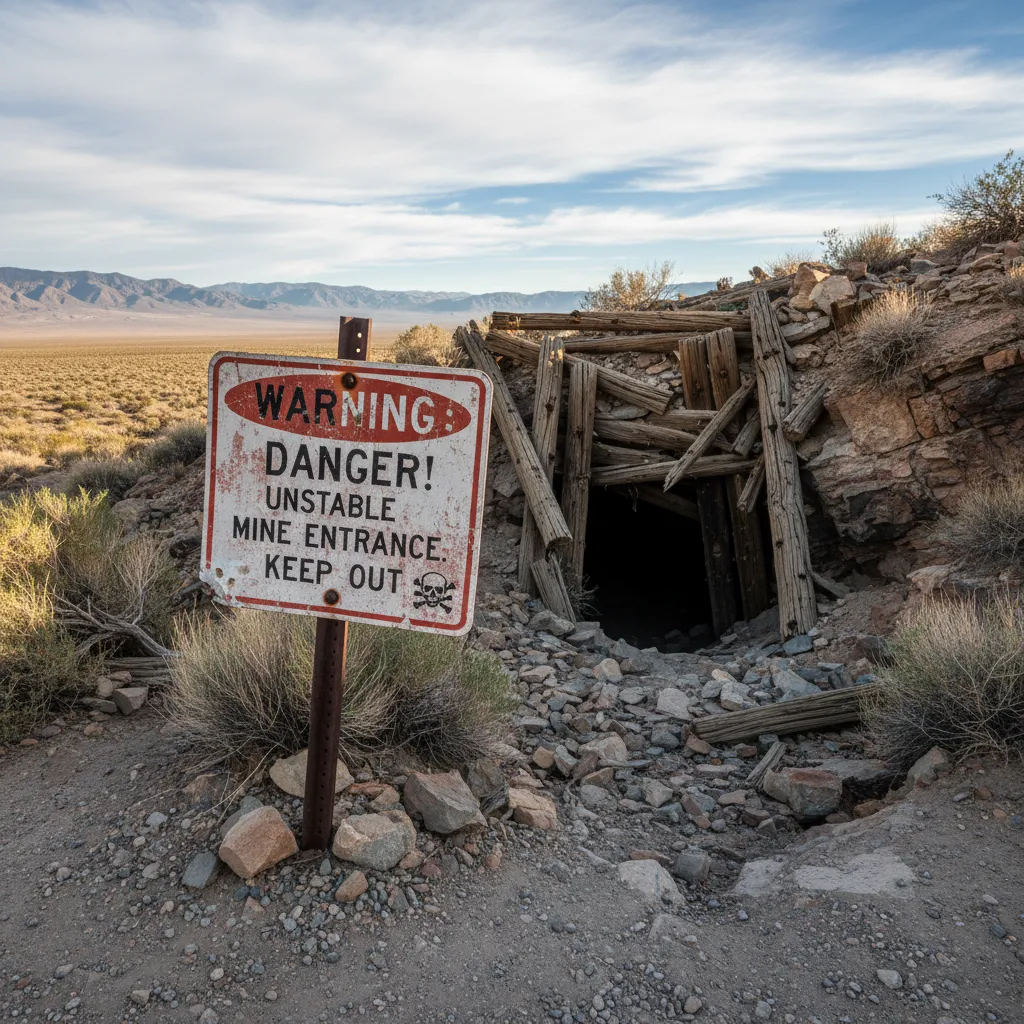
Abandoned mines kill people every year. Not idiots. Curious, capable people who thought “I’ll just peek in” or “it looks stable.” The people who die in mines are regular hikers and explorers who made a reasonable-seeming decision that turned out to be fatal.
Bad air gets people. Carbon dioxide pools in low areas. Methane builds up. Oxygen gets displaced. You can’t see it, smell it, or feel it until you’re unconscious. The Mine Safety and Health Administration (MSHA) reports that bad air is one of the leading causes of death in abandoned mines. There are cases where a rescuer went in after a collapsed person and also died, because the same bad air got them too.
Collapses get people. Hundred-year-old timbers holding up tons of rock. That rock has been slowly shifting for a century. Your footsteps or even your voice vibrations might be what triggers the final failure.
Hidden shafts get people. Vertical drops inside mines covered by rotted planks and a thin layer of debris. You step on what looks like solid ground and you fall two hundred feet. Sometimes they don’t find the body because they can’t safely reach the bottom.
I know this sounds dramatic. I don’t care. Jake is alive because I was dramatic about it on that hillside. Surface exploration is where it’s at. The history, the artifacts, the geology — it’s all visible from outside. I’ve spent full days at mine sites without once feeling like I was missing something by not crawling into a death trap.
What to Bring for Surface Exploration
You don’t need a ton of gear, but showing up empty-handed is a mistake I made exactly once. That Bradshaw Mountains trip with Jake? I forgot sunscreen and water. In January. Still got mildly dehydrated because the desert doesn’t care what month it is.
Here’s what I actually carry now:
- Sturdy boots — ankle support matters on tailings piles. I twisted my ankle in loose slag near Goldfield wearing trail runners and limped for a week.
- Water — minimum one liter per person per hour in desert heat, half that in cooler months. More than you think you need.
- Gloves — leather work gloves. Old mine sites have rusted metal, broken glass, and sharp rock everywhere. I grabbed a quartz specimen near Cripple Creek bare-handed and got a deep slice from a hidden edge of tin can buried in the tailings.
- First aid kit — basic stuff. Bandages, antiseptic, tweezers for splinters. Rusted metal cuts are no joke.
- Phone with offline maps — cell service is nonexistent at most mine sites. Download the area in Google Maps or use the GoldFever.app offline cache before you lose signal.
- UV-rated sunglasses and sunscreen — high desert sun at altitude will cook you fast
- Camera or phone — document what you find. Take wide establishing shots and close-ups of interesting artifacts. GPS-tagged photos help you relocate sites later.
- A buddy — seriously. If you roll an ankle on a tailings pile three miles from your truck with no cell service, you want someone who can go get help. Jake and I have a standing rule: nobody explores alone.
Optional but useful: a rock hammer for examining exposed quartz veins (stay on the surface), a magnifying loupe for checking mineral specimens, and a small backpack to carry it all. I also bring a notebook because I forget details otherwise — the mine near Crown King that had the green copper staining? I would’ve completely mixed it up with a different site if I hadn’t written down the GPS coordinates.
If you’re planning to test tailings for gold while you’re out there, my panning equipment guide covers everything from basic pans to classifiers and what’s actually worth the money.
Abandoned Gold Mines Near Me: Where to Find Them
The West is loaded. I pulled together mine data for every state and the numbers are staggering — some western states have thousands of recorded prospects. Here’s where I’ve had the most luck, in roughly the order I’d recommend:
The California Mother Lode along the Highway 49 corridor — Grass Valley, Nevada City, all through the foothills. Thousands of mines, many on public land. And yes, there’s still gold in those creeks.
Colorado’s mineral belt from the San Juans through Cripple Creek and Leadville. Some of the most photogenic abandoned headframes I’ve seen anywhere, and the nearby streams are still productive for panning. I met a photographer near Oatman, Arizona once who’d been documenting the same headframe every year for fifteen years. The amount of collapse just in his photos was sobering — these sites are actively disappearing, which is part of why photographing them matters.
Nevada — Goldfield, Tonopah, the whole Comstock region. Desert preservation means you can spot sites from far away, and the ruins have this eerie, sun-bleached quality that makes for incredible photos.
Arizona — Wickenburg, the Bradshaws, Oatman. Year-round access, well-preserved sites, and if you’ve got a metal detector the tailings can be surprisingly productive.
Idaho and Montana — the Coeur d’Alene district in Idaho and Bannack in Montana (a literal ghost town that’s now a state park) are worth the drive. Montana’s gold rush towns along the Grasshopper Creek drainage have some of the best-preserved stamp mill foundations I’ve come across.
South Dakota — the Black Hills around Lead and Deadwood. The Homestake Mine operated for over 125 years and the surrounding hills are pockmarked with smaller prospects. Lots of public land access.
The Southeast — North Carolina’s Reed Gold Mine area (site of the first documented US gold find in 1799) and the Dahlonega district in Georgia. These aren’t desert ruins — they’re overgrown with kudzu and hardwoods, so you need to look harder. But the history runs deep, and the nearby creeks still produce color if you know how to find gold in rivers.
Is It Legal to Explore Abandoned Gold Mines?
This is the question I get most, and the answer depends entirely on land ownership. Most abandoned gold mines near me — and near you — fall into a few categories:
BLM public land: The Bureau of Land Management manages millions of acres in the West, and many historic mine sites sit on BLM land. Surface exploration is generally allowed, but check for active mining claims first. The BLM’s LR2000 database shows current claim status. If a claim is active, you need the claimant’s permission.
National Forest land: Many old mines are in National Forests. Casual exploration and recreational gold panning is usually permitted, but motorized equipment and commercial extraction require permits.
State and private land: Always verify ownership. County assessor records are available online in most states. Trespassing on private land or active claims can result in fines — and in some western states, the landowner might be armed and unhappy about it.
State parks and historic sites: Some abandoned mines have been preserved as historic sites, like Bannack in Montana or Reed Gold Mine in North Carolina. These have guided access and sometimes allow panning in designated areas.
The safest approach: use the GoldFever.app map, cross-reference with BLM land status maps, and when in doubt, call the local BLM or Forest Service field office. I’ve found them surprisingly helpful.
How to Use the Map
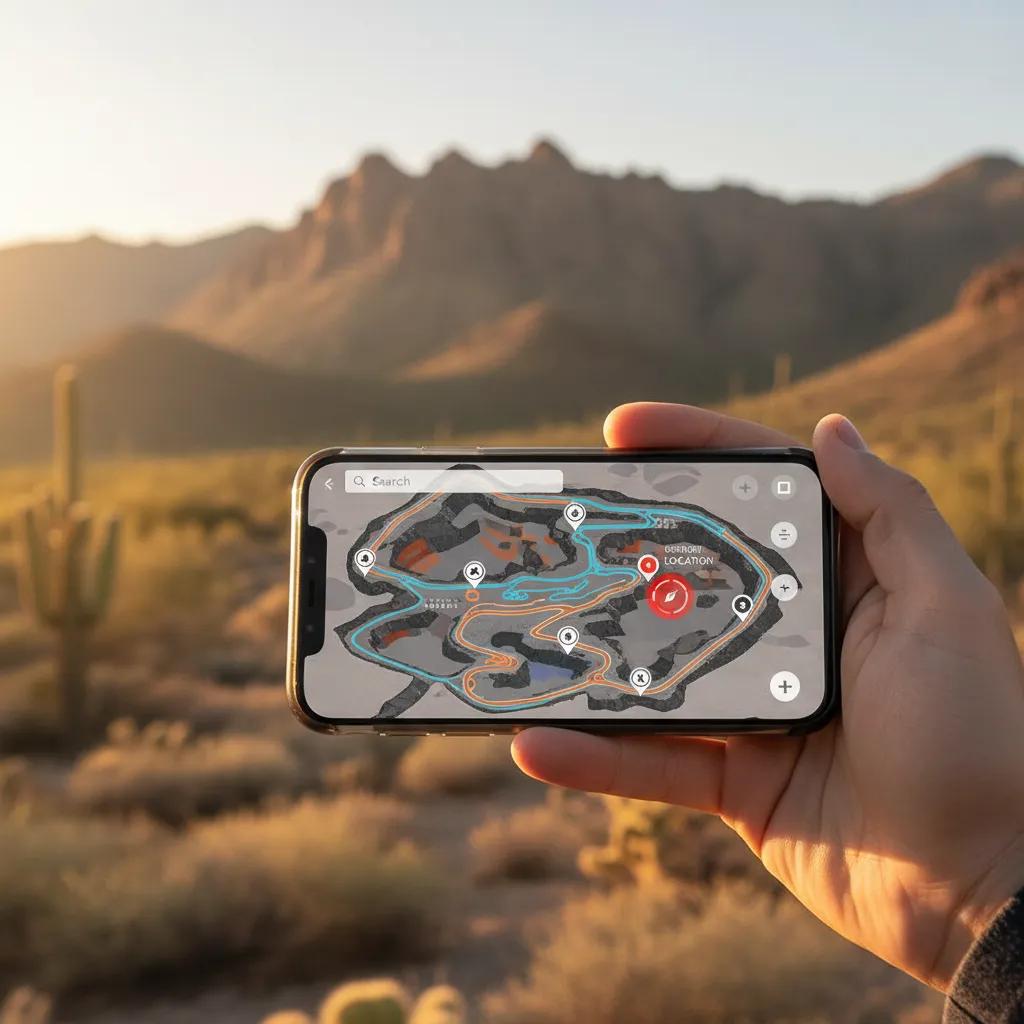
Go to the map, zoom into wherever you want to explore. Tap markers to see mine names and available historic data. Cross-reference with satellite imagery before you visit — you can often spot tailings piles and access roads from above, which saves you from driving down roads like the one that nearly killed Jake’s Tacoma.
The real finds at mine sites aren’t inside the mines. They’re in the tailings, in the old camp areas, in the paths between buildings. I’ve found quartz chunks with visible gold in tailings piles that thousands of people walked right over. An old-timer near Oatman told me “everybody looks at the hole in the mountain and nobody looks at the pile of rocks next to it.” He was right.
If you want to learn more about what placer gold looks like or see where gold is found across the US, I’ve written about both. And if you’re wondering whether that shiny flake is actually gold, check my guide on how to identify gold vs pyrite before you get too excited.
The best abandoned gold mines near me — and probably near you — aren’t the dramatic ones from movies. They’re the quiet hillside prospects where a couple of guys spent a summer in 1903 chasing a quartz vein. Start with the map, pick a Saturday morning, and go see what’s out there. That’s really all you need.