Published
- 21 min read
Gold Panning in North Carolina: 591 Mines, the Best Spots & What to Know
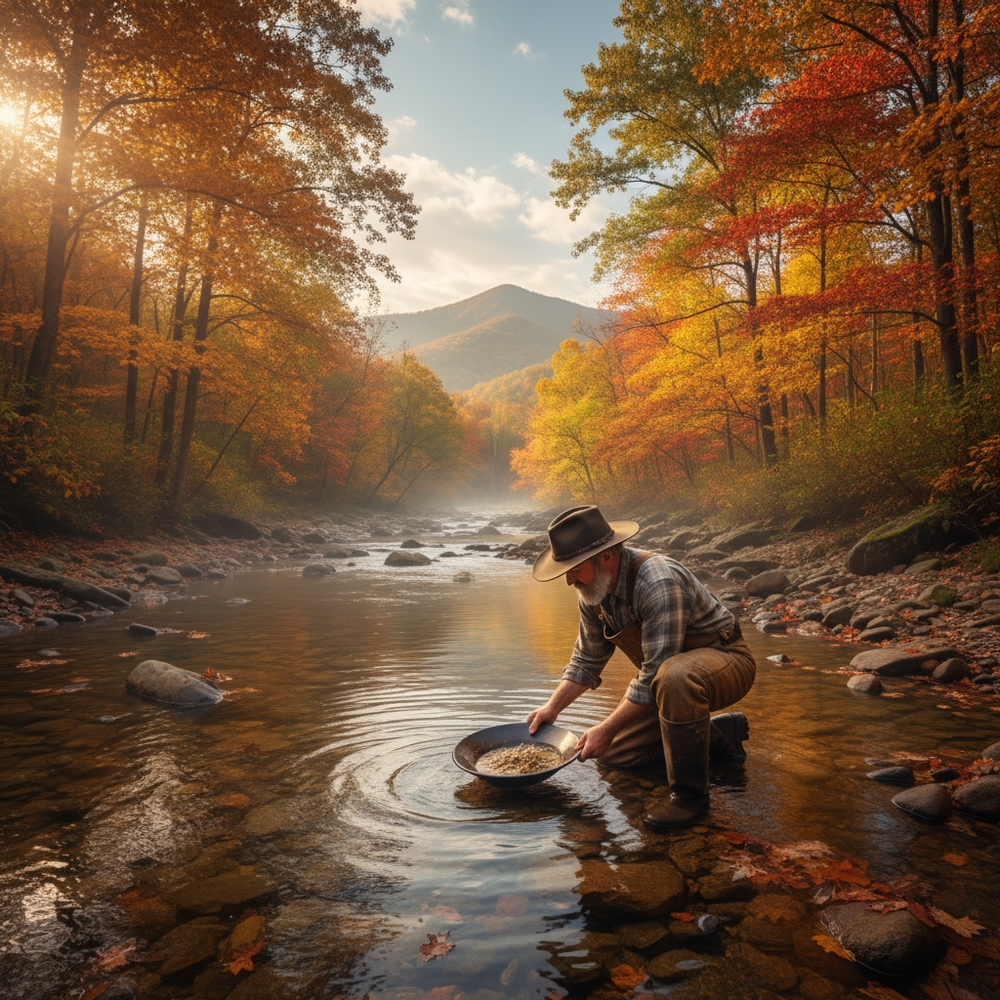
North Carolina is where American gold mining started. Not California. Not Colorado. A twelve-year-old kid named Conrad Reed found a seventeen-pound nugget in Little Meadow Creek in 1799 and used it as a doorstop for three years before anyone figured out what it was. A seventeen-pound gold nugget. As a doorstop. That one rock would be worth somewhere between $300,000 and $600,000 today, and a child was propping open a farmhouse door with it.
That discovery kicked off the first gold rush in the United States, decades before anyone heard of Sutter’s Mill. Over a million ounces of gold have come out of North Carolina since then. The Charlotte area had so much production that the U.S. Treasury opened a mint there in 1838 — one of only a handful of branch mints in the country. Gold panning in North Carolina isn’t some novelty attraction. USGS records document 591 gold-bearing sites across the state — making it the 12th most gold-rich state in the nation and the top producer east of the Mississippi. This state has real geology, real history, and real gold still sitting in its creeks.
I came to North Carolina after spending time in Georgia’s gold country, following the Appalachian gold belt northward. Same metamorphic geology, similar quartz-vein gold systems, but North Carolina has its own character. The creeks are different. The deposits run deeper in some places. And the historical sites here are genuinely impressive — you can walk into an actual mine shaft from the 1830s and see the quartz veins that started everything.
Why North Carolina Has Gold
The short version: volcanoes, continental collisions, and a few hundred million years of erosion.
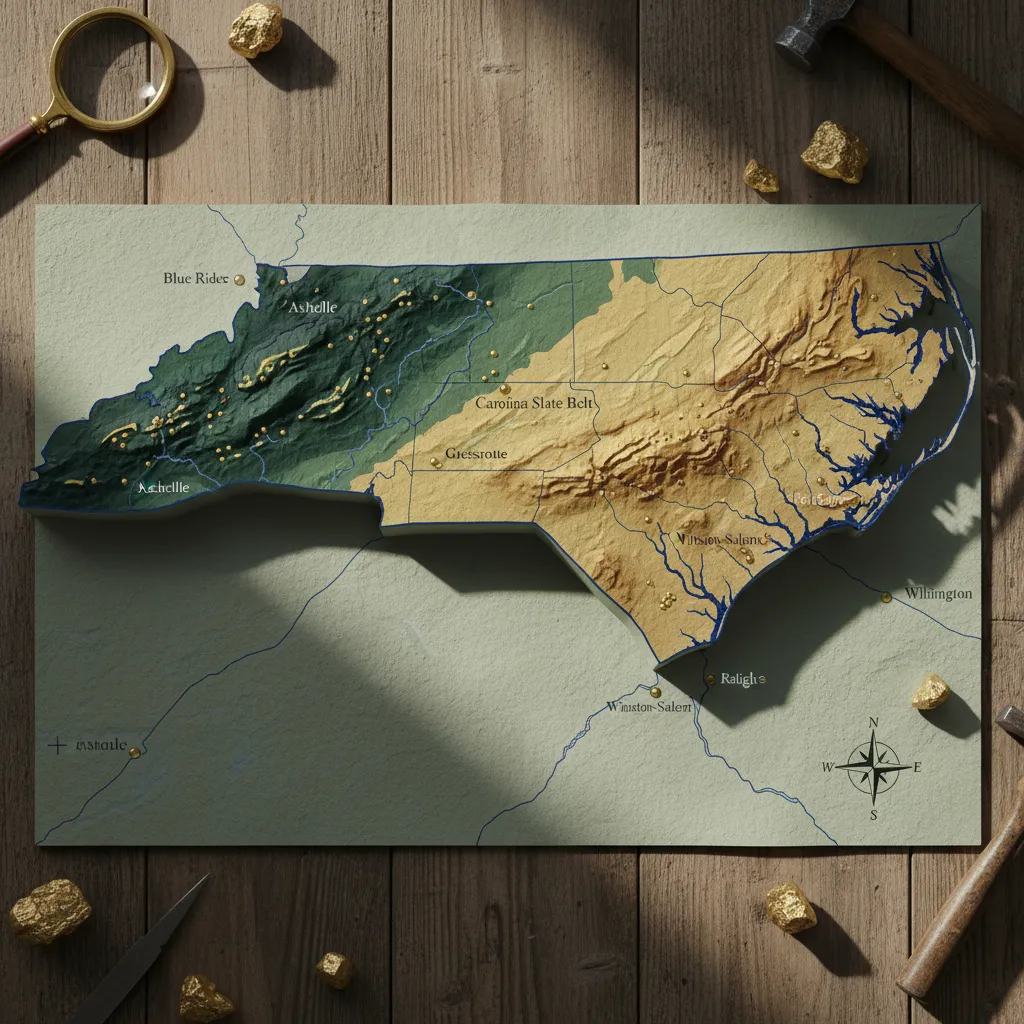
North Carolina’s gold sits in what geologists call the Carolina Slate Belt — a band of ancient volcanic and sedimentary rock that runs from southern Virginia down through the Carolinas and into northeast Georgia. These rocks started as part of a volcanic island arc, something like modern Japan, way back in Precambrian times. When that arc collided with the North American continent during the Appalachian mountain-building event, superheated water circulated through cracks and faults in the rock, carrying dissolved gold and depositing it in quartz veins. Geologists classify these as orogenic gold deposits — gold formed by mountain-building heat and pressure.
Some deposits in the region are epithermal, associated with shallow igneous intrusions that pushed hot, mineral-laden fluids closer to the surface. These tend to concentrate gold in different patterns than the deeper orogenic deposits, and both types are present in North Carolina.
Millions of years of weathering broke down the host rock into a deeply weathered material called saprolite — basically decomposed bedrock that’s soft enough to shovel and process like gravel. That weathering also freed gold from the quartz veins and washed it into streams, creating the placer deposits that early miners exploited and that we can still work today.
There are two main gold-bearing regions in North Carolina:
- Central Piedmont (Carolina Slate Belt): The most productive zone. Counties like Mecklenburg, Cabarrus, Rowan, Stanly, Davidson, Randolph, and Guilford — mostly north and east of Charlotte — contain the densest concentration of historic gold sites. Charlotte sits right on top of this belt, with mines that extend several hundred feet under the city.
- Western Blue Ridge Mountains: Burke, Transylvania, McDowell, and surrounding counties have produced placer gold from higher-gradient mountain streams. The gold here tends to be slightly coarser because the streams have more energy and the source quartz veins are closer to the surface.
Best Places to Pan for Gold in North Carolina
Reed Gold Mine (Cabarrus County) — The Birthplace of US Gold
You can’t write about North Carolina gold without starting at Reed Gold Mine, south of Concord. This is a state historic site now, and it’s worth the visit even if you never touch a gold pan.
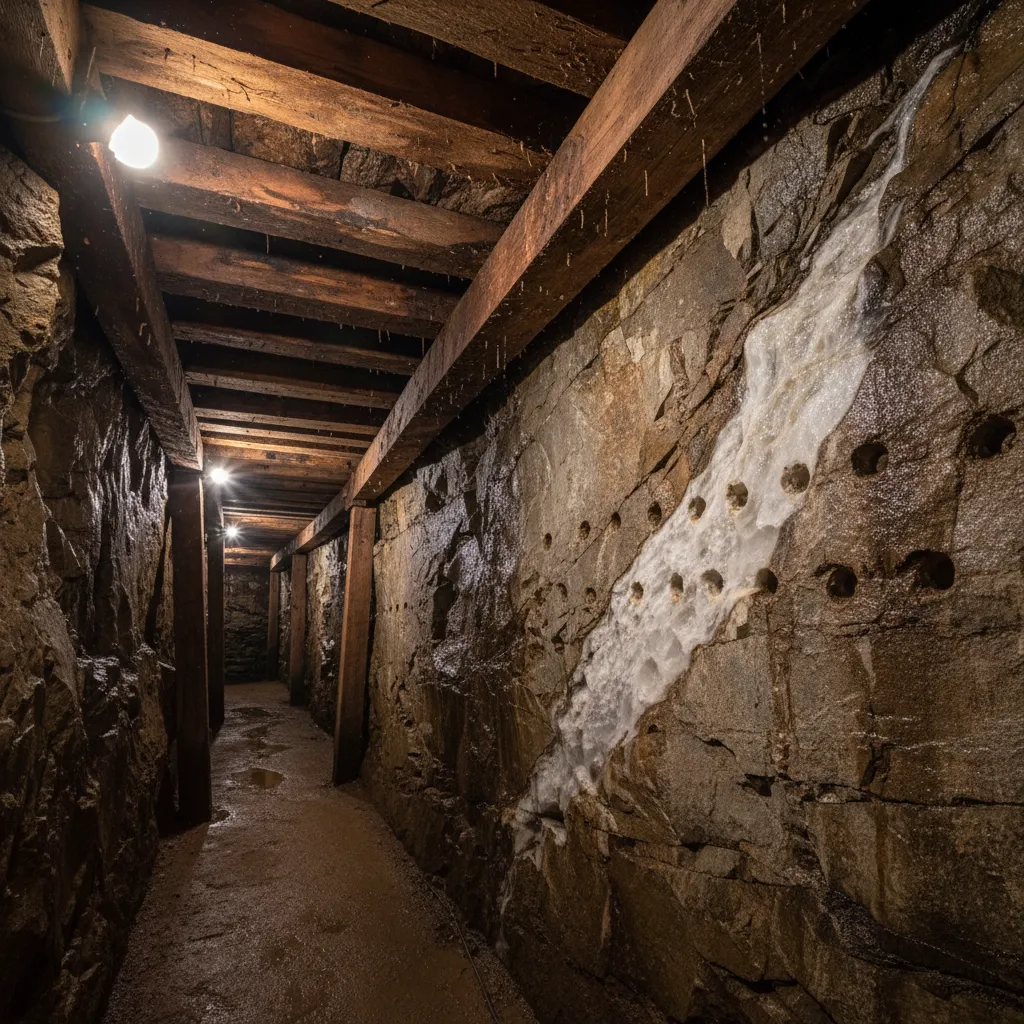
The mine shaft goes down about fifty feet. You can tour the underground workings and see the original hand-drilled blast holes in the quartz veins where miners in the 1830s chased gold into the earth. The ore stamps they used to crush rock weigh 750 pounds each — standing next to them gives you a physical sense of how much work went into extracting gold before diesel engines existed.
They offer panning at the site too. You get a pan, a bag of dirt from the property, and a trough of water. It’s a guided experience and the gold is real — it comes from the creek and the mine tailings, not a bag of seeded material. I found a few tiny flakes, nothing dramatic, but the guide pointed out that gold has been turning up in Little Meadow Creek for over two hundred years and it hasn’t stopped yet. The creek is still producing because the quartz veins feeding it are still weathering. Slow, but steady.
Visitor info: Open Tuesday–Saturday, 9am–5pm. Panning is typically $3 per pan. Free to tour the grounds. About 25 miles northeast of Charlotte off I-85. Check the NC Historic Sites website for seasonal hours and holiday closures.
The thing that struck me most at Reed Mine was a detail about that original seventeen-pound nugget. Dr. Chris Tacker at the NC Museum of Natural Sciences described it as scientifically unusual — nuggets that size are rare anywhere, and the conditions that created it at Reed were exceptional. Unfortunately, the original nuggets were melted down, so nobody can study the geology that produced them. As Tacker put it, it was “almost like mother nature said, ‘Look here, stupid.‘” And for three years, the Reed family used it as a doorstop anyway.
Uwharrie National Forest — Free Public Panning
For actual prospecting — not the guided tourist experience — Uwharrie National Forest is the main destination. It sits in the heart of the old gold-producing region in Montgomery, Randolph, and Stanly Counties, and the forest service allows recreational panning with some restrictions.
You need a permit for motorized equipment. Hand panning and non-motorized sluicing are generally allowed on national forest land, but check with the Uwharrie Ranger District office for current regulations before you go. Rules can change, and specific waterways may have seasonal restrictions.
The creeks in the Uwharries run through the Carolina Slate Belt, so the geology is right. I worked a stretch of creek off a forest road where exposed bedrock created natural riffles across the stream bottom. Classic gold traps — crevices perpendicular to the current where heavy material settles. The gold I found was fine, comparable to what I’ve seen in Georgia. Flour gold, mostly, with a couple of specks I’d generously call small flakes. You need a snuffer bottle and patience.
Garnets are common in the Uwharrie concentrates. If you’re panning and start seeing small red-purple stones in your black sand, pay attention — garnets are indicator minerals. They’re heavy and they settle with the same material gold does. Finding garnets doesn’t guarantee gold, but it means you’re in the right layer. A prospector who works western North Carolina described garnets as his signal to slow down and look more carefully, and I’ve found that holds true.
Access: Free, no entrance fee. Multiple forest road access points. The forest is about an hour east of Charlotte. Camping is available at Badin Lake and other forest campgrounds. Weekdays are uncrowded — I had an entire creek stretch to myself for most of a morning.
Cotton Patch Gold Mine (Stanly County)
Cotton Patch Gold Mine & Campground near New London offers a pay-to-pan experience on historically productive ground. It’s an RV park and campground with gold panning access — a good option if you want a dedicated spot without navigating forest roads. They offer panning, high banking, and sluicing depending on the season. Call ahead for current hours and rates, as they operate seasonally.
Gold Hill (Rowan County)
Gold Hill is worth a day trip. The village is a state historic site with preserved mine structures and interpretive trails. Gold was discovered here in 1824, and extensive mining began in 1843, creating a boom town. Copper mining continued until 1907. You can walk through the ruins of the old processing facilities and see the scale of operations that were happening here before the Civil War.
Twenty-five to fifty percent of the workforce at operations like Gold Hill were enslaved people — a part of the history that the site doesn’t shy away from and that’s important to understand.
Nearby, Mountain Creek Gold Mine & Campground offers weekend gold mining with high banking, panning, and dredging access. Another pay-to-pan option in historically productive ground.
Pisgah and Nantahala National Forests
The western national forests have gold-bearing streams with different character than the Piedmont. These are Blue Ridge Mountain streams — steeper gradient, colder water, more elevation. The gold here tends to be a bit coarser than the Piedmont flour gold because the streams have more energy and the source quartz veins are closer.
One prospector I researched described working placer deposits in western NC mountains that were originally mined during the Gold Rush by dredge operations. The dredges did a thorough job, but gold still accumulates in natural traps — the river doesn’t stop depositing just because someone cleaned it out a hundred years ago. Below ledge rock where water flows over bedrock is a textbook spot. The current creates a drop zone on the downstream side where everything heavy collects.
Access: Free to prospect with hand tools. Check with Pisgah or Nantahala Ranger District offices for current stream-specific rules.
South Mountains and Burke County
South Mountains State Park has historic placer gold deposits. The Brindle Town Gold District south of Morganton was the site of a genuine rush — “very rich placers” according to historical accounts. Access for prospecting within the state park is restricted, but the creeks draining the same geology on adjacent national forest land are worth scouting.
Paid vs. Free Panning Locations
| Location | Type | Cost | Equipment Allowed | Best For |
|---|---|---|---|---|
| Reed Gold Mine | Historic site | ~$3/pan | Pan only (provided) | History, families, beginners |
| Uwharrie National Forest | Public land | Free | Hand tools, non-motorized sluice | Serious prospecting |
| Cotton Patch Gold Mine | Private | Varies (call ahead) | Pan, sluice, high banker | Dedicated panning access |
| Mountain Creek Gold Mine | Private | Varies (call ahead) | Pan, sluice, dredge | Full equipment use |
| Pisgah National Forest | Public land | Free | Hand tools | Mountain stream prospecting |
| Nantahala National Forest | Public land | Free | Hand tools | Remote, uncrowded spots |
Gold Panning Laws and Permits in North Carolina
Is gold panning legal in North Carolina? Yes. Recreational hand panning is legal on public lands and with permission on private land. The specifics depend on where you are.
National Forest Rules
Uwharrie, Pisgah, Nantahala: Hand panning and non-motorized sluicing are generally permitted. Motorized equipment like dredges requires permits and is restricted or prohibited on many streams. Contact the specific ranger district for current rules — they change, and individual streams may have seasonal closures for fish spawning.
State Parks and Private Land
State parks and historic sites: Prospecting is generally prohibited unless specifically offered as a program (like Reed Gold Mine’s panning experience). Don’t assume you can pan in a state park.
Private land: A lot of North Carolina’s best gold-bearing creeks cross private property. Get written permission before you start. Property boundaries in rural counties aren’t always clearly marked.
Can you keep the gold you find? Yes. Gold found through legal recreational prospecting on public land or with landowner permission is yours to keep.
Mining Claims
Active claims exist throughout the gold belt. Check the BLM’s LR2000 system or the GoldFever.app for claim locations. North Carolina’s claim density is lower than western states, but they’re there.
For details on North Carolina and every other state, I put together a complete guide to gold panning laws by state.
One thing worth noting: lead sinkers and fishing tackle accumulate in the same spots gold does. Every time I pan in North Carolina (or anywhere), I pull out split shot and BBs and pack them out. It’s small-scale environmental cleanup and it keeps you honest about what’s actually in your pan.
Gold-Bearing Rivers and Creeks in NC
The best creeks for gold panning in North Carolina are those that drain the Carolina Slate Belt and the Blue Ridge gold zones. Here are the most productive drainages:
- Little Meadow Creek (Cabarrus County): The original discovery site at Reed Gold Mine. Still producing fine gold after 200+ years.
- Uwharrie River and tributaries (Montgomery/Stanly Counties): Runs through the heart of the slate belt gold zone. Multiple access points via forest roads.
- Lick Creek / Town Creek drainage (Montgomery County): Historic placer workings in the Uwharrie area.
- Second Creek and tributaries (Rowan County): Drains the Gold Hill mining district.
- Muddy Creek (McDowell/Burke Counties): Western mountain drainage with placer gold from the Brindle Town district.
- South Muddy Creek and tributaries (Burke County): Near South Mountains, historically productive.
- Various creeks in Pisgah National Forest (Transylvania/Henderson Counties): Mountain streams with coarser gold.
The key is matching creeks to the geology. Use the GoldFever.app interactive mine map to find historic mine locations and then locate the nearest public waterway downstream. Gold doesn’t teleport — it follows gravity and water, so the creek below a historic mine is always worth sampling.
What Equipment Do You Need for Gold Panning in NC?
North Carolina gold is predominantly fine — flour gold and small flakes. Your equipment choices need to account for this.
Essential gear:
- 14-inch gold pan with deep riffles — green or blue for contrast against fine gold
- Classifier (1/2 inch mesh) — removes rocks and speeds up panning
- Snuffer bottle — absolutely critical for NC’s fine gold; you cannot pick up flour gold with your fingers
- Small glass vials — for storing your finds
- Crevicing tools — screwdriver, spoon, or dedicated crevice pick for working bedrock cracks
- Tweezers — for the occasional flake large enough to handle
Recommended additions:
- Hand sluice or mini rocker box — processes more material than panning alone, important when gold is fine and scattered
- Yabby pump (hand suction device) — pulls material from tight bedrock crevices that tools can’t reach
- 5-gallon buckets — for collecting concentrate to process at home; this approach maximizes river time
- Loupe or magnifying glass — fine NC gold often needs magnification to appreciate
- Bug spray — the creek bottoms in the Piedmont have mosquitoes that treat DEET as a seasoning
You don’t need a dredge. Dredging is prohibited or restricted on most NC waterways where you’d want to prospect. Hand tools are the way to go, and honestly, for the type of gold you’ll find here, a good pan and snuffer bottle will recover nearly everything a dredge would.
Step-by-Step: How to Pan for Gold in North Carolina
If you’re new to gold panning, North Carolina is a forgiving place to learn. The water isn’t dangerously cold, the terrain is accessible, and the gold is there if you know where to look.
-
Scout your spot. Look for exposed bedrock in the creek, inside bends where current slows, and areas downstream of known mine sites. Quartz in the creek gravel is a good sign — gold in North Carolina is associated with quartz veins.
-
Dig to bedrock. Gold sinks. It’s been sinking for thousands of years. The material sitting on top of bedrock, and especially in the cracks of bedrock, is where the gold concentrates. Scrape crevices clean with your crevicing tool.
-
Classify your material. Put the dirt through your classifier over the pan to remove rocks larger than half an inch. This saves time and keeps you from accidentally flicking gold out with a big rock.
-
Stratify. Submerge your pan and shake it side to side vigorously. This sinks the heavy material — gold, black sand, garnets — to the bottom. Spend extra time on this step. It’s the most important part of the entire process.
-
Wash off the light material. Tilt the pan forward slightly, shake side to side, and let the lighter sand and gravel wash over the front edge. Re-stratify every few washes.
-
Watch for garnets. Small red-purple stones in your concentrate mean you’re in the right heavy-mineral layer. If you see garnets, slow down — gold settles in the same zone.
-
Use your snuffer bottle. When you’re down to black sand and see specks of gold, suck them up with the snuffer bottle. Trying to pick up flour gold with wet fingers is an exercise in frustration.
For a complete walkthrough with photos and tips, see the full beginner’s guide to gold panning.
NC-specific tip: Consider collecting your classified material in buckets and taking it home for final processing. Flour gold is tedious to recover at creekside. You’ll get better recovery and spend more time digging productive material if you do your final panning at home with warm water and good lighting.
Best Time of Year to Pan for Gold in NC
Spring (March–May): Higher water from rain. Harder to access bedrock, but good for scouting where material deposits during high flow. Dogwoods and redbuds are blooming — the Piedmont in April is genuinely beautiful.
Summer (June–August): Hot and humid. Western mountain streams are more comfortable than Piedmont creeks in July. Start early, finish by noon. Afternoon thunderstorms are common in the mountains. Water levels can drop enough to expose good bedrock.
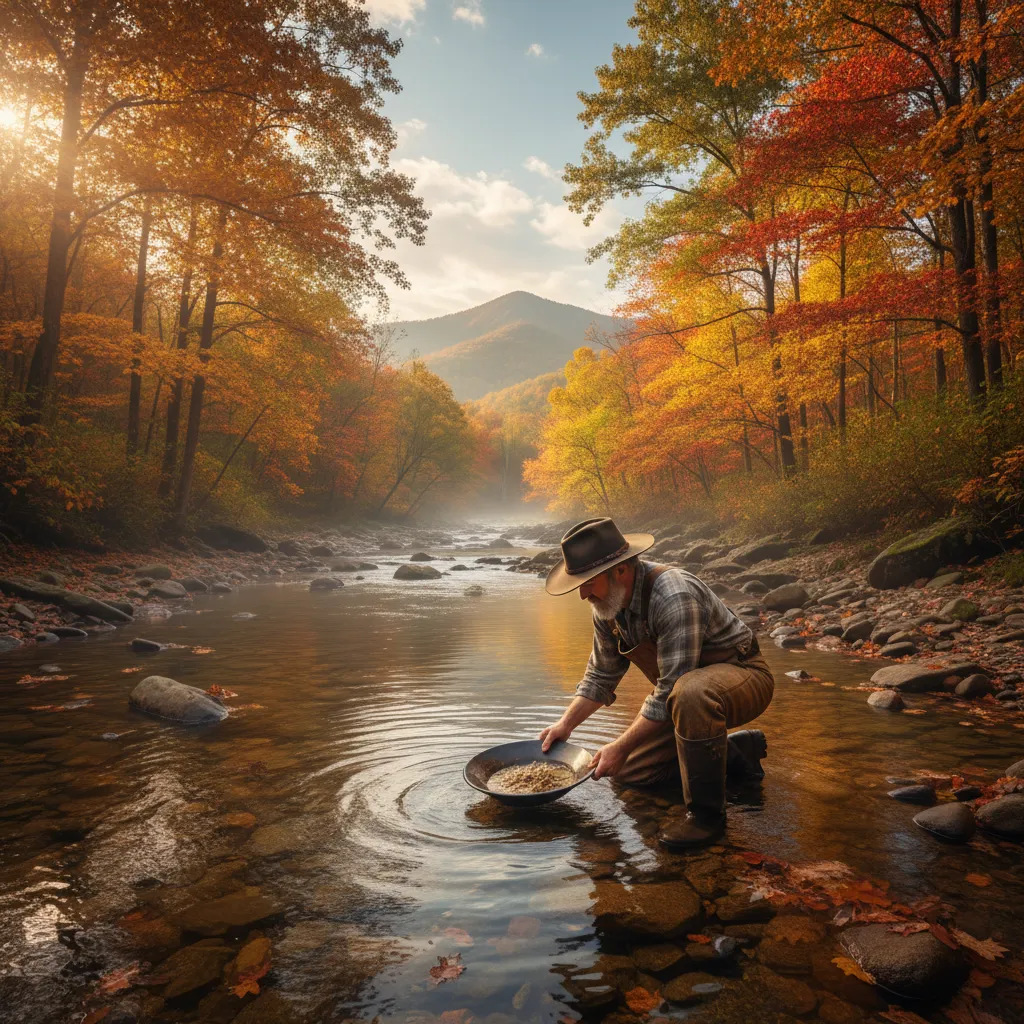
Fall (September–November): The best window. Humidity breaks in October, water levels drop, and the hardwood forests turn colors that make you forget what you came here for. I lost twenty minutes one morning just looking at a ridge of orange and red maples above the creek I was supposed to be working. Didn’t regret it.
Winter (December–February): Cool but mild by mountain-state standards. Low water exposes the most bedrock — prime crevicing conditions. Tourist sites are quieter. February can hit 70°F some days. If you’re used to prospecting in Colorado or Alaska, a North Carolina winter will feel downright tropical.
What Kind of Gold Will You Find?
You’re going to find fine gold. Flour gold, mostly — specks that you need a snuffer bottle to collect and a loupe to appreciate. Occasionally you’ll get a small flake, especially in the western mountain streams where steeper gradients keep gold coarser. Nuggets are not happening unless you’re the luckiest person alive, but that seventeen-pound doorstop proves the geology is capable of surprises. In 1896, a 24-pound nugget — the “Shin Nugget” — was found in NC, so the state has a track record of producing exceptional specimens.
The gold in North Carolina is mostly found in low-sulfide gold-quartz veins — gold embedded in quartz with associated pyrite, chalcopyrite, and other sulfide minerals. Knowing how to identify real gold versus pyrite is worth learning before you go, because iron pyrite is common in the Carolina Slate Belt and will show up in your pan regularly.
Metal detecting for gold is another option in North Carolina — modern prospectors have found nuggets with detectors in areas where panners typically find only flour gold. A detector can reach material that a pan can’t, especially in saprolite deposits above the water line. Some prospectors use detectors along old mine tailings and dumps to find pieces that early miners missed.
NC Gold Panning Safety Tips
- Snakes: Copperheads and timber rattlesnakes are present in North Carolina’s gold country. Watch where you put your hands when crevicing bedrock, and step on logs rather than over them.
- Water safety: Mountain streams can rise fast after rain. Check weather forecasts and be aware of upstream conditions. Don’t prospect during or immediately after heavy storms.
- Ticks: Deer ticks and lone star ticks are active spring through fall. Wear treated clothing and check yourself after every outing.
- Sun exposure: Piedmont creeks offer less shade than mountain streams. Sunscreen and a hat are non-negotiable in summer.
- Private property: Rural property boundaries aren’t always marked. When in doubt, ask. Trespassing is taken seriously in rural NC.
How North Carolina Compares
If you’ve prospected out west — in Colorado, Arizona, or California — North Carolina is a different game. The gold is generally finer, the deposits are in lower-energy streams, and you’re working Appalachian terrain instead of Rocky Mountain canyons.
What North Carolina has that western states don’t: comfort. I panned a creek in October wearing a flannel shirt and jeans. The water was cool, not the hand-numbing snowmelt that makes Colorado prospecting an exercise in suffering. No altitude headaches. No afternoon lightning storms building over exposed ridgelines. The humidity was gone by mid-October and the temperature sat around sixty-five all day. After years of Colorado trips where I lose feeling in my fingers after ten minutes, panning in a T-shirt felt like cheating.
The gold belt connection between North Carolina and Georgia is worth thinking about if you’re planning a trip. The same geology runs through both states. You could realistically do a week-long trip starting in Dahlonega, Georgia, driving up through the western Carolinas, and ending at Reed Gold Mine — prospecting the same metamorphic belt the entire way. Different states, different creeks, same ancient volcanoes depositing gold in quartz veins.
The Appalachian gold belt extends across multiple states and gets a fraction of the prospecting pressure that western streams get. If you want to find gold without fighting for space on a crowded creek, the Southeast is where you should be looking.
Explore NC Gold Mines with the Gold Fever App
North Carolina has 591 documented gold-bearing sites spread across the state — far too many to list in any article. The GoldFever.app maps every one of them using USGS MRDS data, letting you zoom into any county, tap individual mines, and see full records including commodities, production history, and GPS coordinates.
Planning a trip to the Uwharries? Open the app, pan to Montgomery County, and you’ll see exactly where historic mines cluster along creek drainages. Heading to the western mountains? Check Burke and McDowell Counties for mine density before you pick a campsite. The app turns the USGS database into a practical prospecting tool instead of a spreadsheet nobody reads.
Planning Your Trip
Reed Gold Mine is about 25 miles northeast of Charlotte, easy to reach from I-85. Uwharrie National Forest is roughly an hour east of Charlotte. The western mountain sites near Morganton and Pisgah are 2-3 hours northwest, closer to Asheville.
For a multi-day trip, I’d structure it like this: Day one at Reed Gold Mine for the history and a guided pan. Day two in the Uwharries working forest service creeks. Day three in the western mountains if you want steeper terrain and slightly coarser gold. Charlotte, Concord, and Asheville all have plenty of lodging. Camping in Uwharrie or Pisgah is cheap and puts you close to water.
Bring your standard panning kit — 14-inch pan, classifier, snuffer bottle, a crevicing tool, and small vials for your finds. Add a good set of gear if you plan to sluice. For North Carolina specifically, bring bug spray and tick repellent.
Frequently Asked Questions
Where can I pan for gold in North Carolina? The best public options are Uwharrie National Forest (free, hand tools allowed), Pisgah National Forest, and Nantahala National Forest. For guided experiences, Reed Gold Mine in Cabarrus County offers panning on historically productive ground. Pay-to-pan options include Cotton Patch Gold Mine near New London and Mountain Creek Gold Mine near Gold Hill.
Is gold panning legal in North Carolina? Yes. Recreational hand panning is legal on national forest land and with landowner permission on private property. Motorized equipment like dredges requires permits and is restricted on most waterways. State parks generally prohibit prospecting unless it’s offered as a specific program.
Do you need a permit to pan for gold in NC? No permit is required for hand panning on national forest land. Motorized equipment requires a permit from the US Forest Service. Always check with the local ranger district for stream-specific rules before you go.
Can you keep gold you find in North Carolina? Yes. Gold found through legal recreational prospecting on public land or with private landowner permission is yours to keep.
Where is the best place to find gold in NC? Uwharrie National Forest in the central Piedmont offers the best combination of accessible public land, productive geology (Carolina Slate Belt), and uncrowded conditions. For beginners, Reed Gold Mine provides a guided introduction on the site where American gold mining began.
North Carolina isn’t going to make you rich. But standing in a mountain creek in October, cool water running over your boots, watching a few specks of gold settle into the bottom of your pan against a backdrop of Blue Ridge autumn color — that’s a payoff the assay office can’t measure.